AI for hotels: a guest messaging chatbot, an AI receptionist, online check-in and smoother operations
It’s 3 pm and there’s a queue at the front desk. While you check a family in, the phone rings (someone wants to know about parking), a WhatsApp message arrives in German about a late arrival, an email asks for an invoice in a company’s name and maintenance radios that room 214 has no hot water. At night, one receptionist covers the desk alone, and booking enquiries wait until morning, by which time the guest has booked through an OTA. This page explains which parts of that work AI can take on in a hotel, aparthotel or hotel group, what it should never do on its own, and what it costs.
The short answer
- What you can automate: guest messaging before, during and after the stay (WhatsApp, web chat and email) in the guest’s language, phone calls about bookings and FAQs, online check-in and guest registration, upselling (late checkout, transfers, experiences), review replies, and housekeeping and maintenance requests.
- What it saves: front desk hours spent answering the same questions, direct bookings lost overnight or in another language, slow check-ins at the desk, and maintenance issues lost in a group chat.
- What it shouldn’t do alone: quote rates or availability that don’t come from your PMS (property management system) or booking engine, change prices, handle a serious complaint or decide on a refund.
- What it costs: an assistant that answers from your hotel’s information, from about €1,000. An agent connected to your PMS or booking engine (1–3 tools), €2,000–5,000. A voice agent that answers the phone, or a project spanning several systems, from €5,000. Usage is extra: cents per conversation and roughly €0.10–0.30 per minute of voice.
- How to start: with the channel where you lose the most today (usually WhatsApp and the phone out of hours), connected to your PMS so the agent works from real reservations and never makes things up.
What you can automate in a hotel
| Process | What AI or automation does | Who benefits |
|---|---|---|
| Guest messaging | Answers on WhatsApp, web chat and email, in the guest’s language, using their booking details | Front desk, guests |
| Phone | An AI receptionist handles booking calls and FAQs and passes everything else to the desk | Front desk, reservations |
| Direct bookings | Checks availability and rates in the booking engine and sends a booking link | Reservations, management |
| Online check-in | Collects guest details before arrival and prepares the guest registration | Front desk, guests |
| Upselling | Offers late checkout, transfers, dinners or experiences at the right moment | Management, guests |
| Reviews | Drafts replies in the guest’s language and invites every guest to review | Management, marketing |
| Housekeeping and maintenance | Turns staff voice notes into tracked issues with photos, priority and alerts | Housekeeping, maintenance |
| Pricing | Summarises occupancy, pickup and competitor rates; a person decides | Revenue, management |
| Staff scheduling | Proposes rotas from forecast occupancy, arrivals and departures | Department heads |
| Seasonal hiring | Sets new staff up in every system from a single form | HR, admin |
A hotel AI chatbot for guest messaging before, during and after the stay
Before: the hotel’s WhatsApp lives on the front desk phone. The same questions arrive a hundred times (“what time is check-in?”, “is there parking?”, “can we leave our bags?”), and messages in Dutch or German wait until someone who speaks the language comes on shift.
After: an AI agent replies straight away on WhatsApp, web chat or email, in whatever language the guest writes in. Because it’s connected to the PMS, it recognises the guest by phone number or booking reference and answers with their details: dates, room type, whether breakfast is included, what’s left to pay. During the stay it takes requests (towels, an extra pillow, a cot) and routes them to the right department. After checkout it sends the invoice and a review invitation.
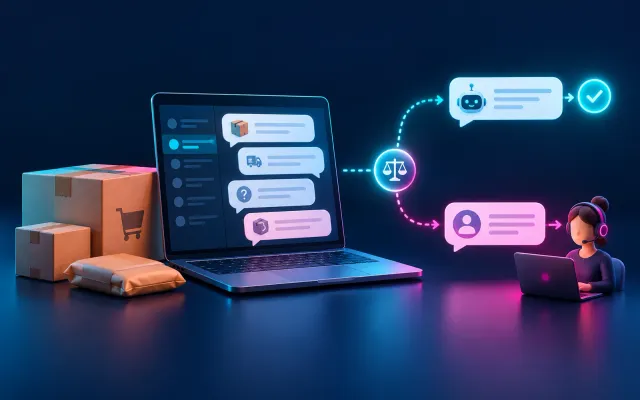
Anything it can’t or shouldn’t handle (a complaint, a refund, a group booking, an unusual request) goes to the front desk with a summary, so the guest doesn’t have to repeat themselves.
The PMS connection is what makes it work. The major PMSs offer APIs (the interface another program uses to read and update reservations): Mews has its Connector API for integrations, Cloudbeds publishes a PMS API covering reservations, guests and check-in, and Oracle OPERA Cloud connects through its OHIP integration platform. Access depends on the vendor and your contract (some require you to register as an integration partner), so we confirm it at the start of every project. If your PMS has no API, the agent can work from your general hotel information and leave booking-specific questions to the desk.
For WhatsApp there are two routes: Meta’s official API, which charges per message, or a connection to a normal number through Evolution API, with no per-message cost but not authorised by Meta. We compare them in Evolution API vs the WhatsApp Business API.
An AI receptionist that answers the phone
Before: the phone rings while the desk is serving a guest. Either the person in front of you waits or the call is lost. At night, the receptionist handles the desk, the till and the phone alone.
After: when nobody picks up (or during the hours you choose), an AI voice agent answers. It introduces itself as the hotel’s assistant, handles the FAQs (opening hours, parking, pets, directions), checks the day’s availability and rates in the booking engine, and sends a booking link or a confirmation of a change by WhatsApp or SMS. It reads the details back before confirming anything. If the caller asks for a person, or the call is a complaint or a group enquiry, it transfers the call or leaves a note for the desk.
This isn’t theory. For a European booking platform we built a voice agent and a chatbot that look up bookings in real time (by the caller’s phone number or their booking reference) in four languages and hand over to a person when they can’t resolve something. 80% of enquiries are now solved without human intervention.
Direct bookings vs OTA commissions
Every booking that comes through an OTA (Booking.com, Expedia) pays commission. Many direct bookings are lost for simple reasons: an unanswered question at 11 pm or an email nobody replies to until the next day. An agent that answers instantly on your website, on WhatsApp and on the phone, and sends a booking-engine link with the dates already filled in, wins back some of those bookings.
One caveat: you can’t “poach” guests who booked through an OTA. Booking.com’s terms, for example, limit the use of guest contact details to what the stay requires and prohibit unsolicited messages to them. The agent looks after those guests for their stay, not for marketing.
Online check-in and guest registration
Before: tired guests queue while the desk photocopies or types in the passport of every traveller. Then someone has to submit the registration to the authorities.
After: a few days before arrival, the guest gets a link by WhatsApp or email to check in online: they fill in each traveller’s details, sign and, if you want, pay or leave a deposit. AI can read the ID document with OCR (optical character recognition) to fill in the fields and flag anything missing. At the desk, check-in becomes handing over the key.
In Spain, Royal Decree 933/2021 requires accommodation providers to record travellers’ details (identity, ID document, nationality, date of birth, address, contact details and transaction and payment data), submit them to the Ministry of the Interior through SES.HOSPEDAJES within 24 hours, and keep them for three years. The platform has been mandatory since 2 December 2024; Catalonia and the Basque Country use their own systems. Other countries have their own guest registration rules. Many PMSs and check-in tools already submit the data; if yours does, we use it. What we add is that the data arrives complete, without anyone retyping it.
Upselling: late checkout, transfers and experiences
Before: extras depend on the receptionist remembering to offer them, and with a queue at the desk nobody does.
After: the agent offers each thing at the right moment: an airport transfer when the guest confirms their flight, dinner or an excursion the day after arrival, late checkout the evening before departure if the PMS shows the room has no arrival that day. If the guest accepts, the charge goes on their folio or a payment link is sent, and the relevant team is notified. No pushing: one offer at a time, and a no is never repeated.
Review replies in the guest’s language
Before: reviews on Google, Booking.com and Tripadvisor get answered when someone has time. The ones in other languages, never.
After: every new review arrives with a reply drafted in the hotel’s tone and in the guest’s language, mentioning what they actually wrote. Positive ones go out with one click; negative ones alert management and are never answered without a person reading them. AI also groups the month’s comments (noise, breakfast, Wi-Fi, cleanliness) so you can see what keeps coming up. We built exactly that for a group of five hotels: reviews from Booking.com, Google, Tripadvisor and Hotels.com in one panel, conclusions checked by a second AI model, and a monthly summary that says what has been fixed and what persists compared with previous months.
Review invitations can be automated too, with one rule: invite every guest, not just the happy ones. Google prohibits selectively soliciting reviews or offering incentives, and the same principle applies on other platforms.
Housekeeping and maintenance from a voice note
Before: a room attendant notices the toilet in 312 is leaking and tells the housekeeper, who writes it on paper or posts it in a WhatsApp group. Three days later, nobody knows whether it was fixed, and the next guest mentions it in their review.
After: the attendant records a voice note on their phone (“312, toilet leaking”). AI transcribes it, works out what it’s about and creates the issue with the room, description and urgency; she adds a photo and sends it. Maintenance gets the alert, closes the job with a photo of the fix, and the room is blocked or released accordingly. At month end, the report writes itself.
Housekeeping, maintenance, gardens and pools are usually the least digitised part of a hotel: paper checklists, WhatsApp groups and a supervisor walking the floors. That’s exactly the kind of operations control we’ve built, from the supplier side rather than for a hotel itself. For a gardening company that looks after the grounds of 40+ hotels, with 200+ gardeners, we built a platform where voice notes become structured incidents, every incident with photos notifies the hotel immediately, every task is closed with photo proof, the hotel is alerted within 5 minutes if someone hasn’t clocked in for their shift, and AI writes each hotel’s monthly report.
Pricing and revenue: AI helps, a person decides
AI can prepare a morning summary: occupancy for the coming days, pickup against last year, competitor rates, events in town. It can suggest adjustments too. But prices are set by a person, or by a revenue management system you know and control. An AI agent shouldn’t change rates on its own, least of all across every channel at once.
Staff scheduling and seasonal hiring
AI can propose housekeeping and front desk rotas from forecast arrivals, departures and occupancy, and notify the team. The department head approves the rota: employment agreements, rest periods and working-time records remain the hotel’s responsibility.
In peak season, setting up each new hire in time tracking, payroll, the PMS and every other system takes hours. For a multi-company group in the Balearic Islands, registering a new employee across six systems went from 15+ hours a month in peak season to a single entry.
What a typical rollout looks like
- Start with the channel that loses the most. Usually WhatsApp and web chat, connected to the PMS, with FAQs, policies (cancellation, pets, children, opening hours) and room-type information put in order before launch.
- Launch with a safety net. For the first few weeks, the front desk sees the conversations and anything uncertain goes to a person. We review every conversation and fix what goes wrong.
- Then the next step. The phone, online check-in, upselling, reviews, and housekeeping and maintenance. Each step builds on the last.
- For a group with several hotels, the same agent serves them all, with each property’s information and rules.
What still needs a person: the welcome at the desk, complaints, refunds and compensation, groups and events, negative reviews, pricing and rotas. AI takes away repetitive work; your team still provides the hospitality.
The risks of doing it alone
Plenty of tools promise a “hotel chatbot in an afternoon”. These are the problems that appear when it’s set up without experience:
- Made-up rates and availability. An AI model without clear limits answers confidently even when it doesn’t know. If it confirms a rate or a room that doesn’t exist, you have an angry guest and a complaint.
- Double bookings. A bot that doesn’t check the PMS or channel manager in real time, or mishandles two requests for the last room, leaves you overbooked in August.
- ID documents stored carelessly. Passport photos in a chat, on the front desk phone, or in an AI service that keeps and trains on the data. That’s a serious GDPR problem: guest registration data may only be used for its legal purpose and must be protected.
- Breaking OTA rules. Using Booking.com guests’ contact details for marketing or steering them to book direct can lead to penalties.
- Not telling guests it’s AI. The EU AI Act requires people to be told they’re interacting with an AI system when it isn’t obvious. We cover this in our EU AI Act guide for businesses.
- Staff who don’t use it. If the front desk doesn’t trust the agent, they keep answering by hand and the project dies. If housekeeping has to fill in a long form, they go back to the WhatsApp group. It has to be designed with the people who’ll use it.
- Nobody watching. Rates, seasons or breakfast hours change and nobody updates the agent. Without conversation logs, mistakes only show up in reviews.
A partner who has done this before starts with the limits (what the agent may say and do, and what it may not), connects it to your real systems, tests it on real conversations before launch and puts monitoring in place to catch failures.
Want to see what you could automate in your hotel? Book a free call and we’ll walk you through the numbers.
How we do it at Aitomatik
- Agents connected to your systems. We build AI agents for WhatsApp, web chat, email and phone that work with your PMS, booking engine and documents. If you want to know how an agent differs from a chatbot, read what is an AI agent. Prices and usage costs are broken down in how much does an AI agent cost.
- What goes out automatically and what a person reviews. We use Jev, a decision model from TypeSafe that returns calibrated probabilities instead of text, to decide whether an AI-drafted reply can go out on its own or needs review: breakfast times or a booking’s status can go out automatically; a complaint or a refund goes to a person. We already use it in production to classify messages from our own contact form.
- Every conversation saved and evaluated. We review the conversations of the agents we build and test every change against real conversations before shipping it. If you want your front desk to see conversations and take over a chat, we add a dashboard (optional, at extra cost).
- Data in Europe. For EU clients, we use models processed in Europe, with zero data retention and no training on your conversations, plus a backup model from a different provider, also in the EU. Details in our guide to EU data residency and GDPR for AI.
- Projects we’ve already delivered:
- AI review analysis for a group of five hotels: reviews from four platforms in one panel, each conclusion linked to the reviews behind it, and a monthly summary that compares with previous months.
- An AI-powered management platform for a gardening company working in 40+ hotels: voice notes turned into incidents, hotels alerted within 5 minutes and AI-written monthly reports. The same pattern as housekeeping and maintenance.
- Customer support automation with AI: booking lookups by phone and chat in four languages, with 80% less human work.
- An AI roadmap for a multi-company group in the Balearic Islands: around 100 quote requests a day drafted automatically, new hires registered with a single entry and 1,600+ hours a year freed up.
- Related services: AI-powered customer service for WhatsApp, chat and phone, and reputation management for reviews. If you also run a restaurant open to the public, see our page on AI for restaurants.
Frequently asked questions
What is the best AI tool for hotels? It depends on where you lose the most time or bookings. For guest communication, the best option is usually an agent connected to your PMS and booking engine, not yet another tool nobody maintains. For internal work (writing copy, analysing reviews, preparing reports), ChatGPT, Claude or Gemini on a business plan is enough. We compare them in ChatGPT vs Claude vs Gemini for business.
How much does a hotel AI chatbot cost? A WhatsApp or web chat assistant that answers from your hotel’s information starts from about €1,000. If it looks up reservations in your PMS, €2,000–5,000. With phone or several systems, from €5,000. Plus usage: cents per conversation and roughly €0.10–0.30 per minute of voice.
What does an AI receptionist do? It answers the phone, handles FAQs, checks availability and rates, takes simple bookings and changes, and sends confirmations by text. It works well when it’s connected to your booking engine, reads details back before confirming and passes anything that isn’t simple to the front desk.
Is AI replacing hotel receptionists? No. It takes the phone, WhatsApp and paperwork off their plate so they can look after the guest in front of them. The welcome, complaints and decisions stay with people.
Can AI handle guest registration and ID checks? AI can collect the details during online check-in and read the ID document so nobody has to retype it. Submitting it to the authorities (SES.HOSPEDAJES in Spain) is usually done by the PMS or a check-in tool. What matters is that the data is complete, sent on time and stored securely.
Let’s talk about your hotel
Tell us how many rooms you have, which PMS you use and where your messages and calls come from today, and we’ll tell you where to start and what it would cost. Browse our guides and services, or book a free call.
Indicative prices for SME projects. This page isn’t legal advice on guest registration or data protection. Last reviewed: 15 October 2026.