AI for Restaurants: Phone Answering, WhatsApp Reservations, Fewer No-Shows and Allergen Answers You Can Trust

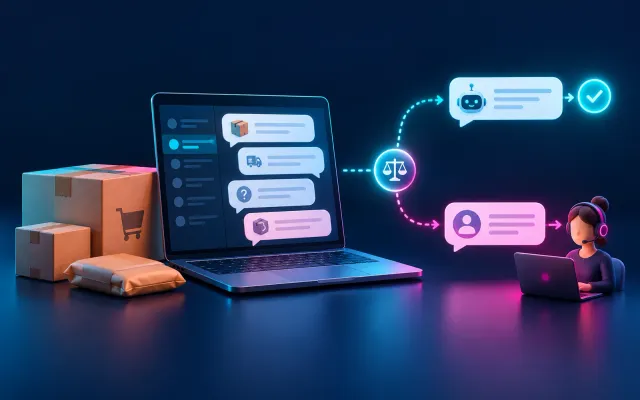
Friday, 9:30pm. Every table is full, the kitchen is flat out and the phone rings for the fourth time in ten minutes. Nobody can pick up, so that table of six ends up across the street. Meanwhile, twenty WhatsApp messages sit unanswered: is the terrace open, does the paella have shellfish, can you seat 30 for an office party? This page covers what AI can realistically take off your plate in a restaurant, bar or hospitality group, from AI phone answering to WhatsApp reservations, what it must never do on its own, and what it costs.
The short answer
- What you can automate: answering reservation calls when nobody can pick up, taking bookings on WhatsApp, confirmations and reminders, menu and opening-hours questions, group and event enquiries with quotes, review replies, supplier invoices and delivery notes, and guests who speak other languages.
- What it saves: missed calls during service (each one can be a table), hours of a manager stuck on the phone and WhatsApp, and empty tables from no-shows.
- What it should never do alone: give allergen information that doesn’t come from your own allergen matrix, accept a large group without a person checking, or promise anything your booking system hasn’t confirmed.
- What it costs: a WhatsApp assistant that answers from your menu and information, from around €1,000. An agent that books straight into your reservation system, €2,000 to €5,000. An AI voice agent that answers the phone, from €5,000. Usage is extra: cents per chat and roughly €0.10–0.30 per minute of voice.
- How to start: with the channel where you lose the most bookings today (usually the phone during service or WhatsApp after hours), connected to your reservation system so there are no double bookings.
What you can automate
| Process | What AI or automation does | Who benefits |
|---|---|---|
| Phone reservations | An AI voice agent answers the calls nobody can take, checks availability and books | Host, front of house, guests |
| WhatsApp reservations | Replies, books, changes and cancels in your reservation system, any time of day | Front of house, guests |
| Confirmations and no-shows | Asks guests to confirm, releases unconfirmed tables and alerts the waitlist | Front of house, management |
| Groups and events | Collects date, headcount, budget and allergies, sends set menus and drafts the quote | Events manager |
| Menu and allergens | Answers from your menu and allergen matrix, never guessing; anything unclear goes to a person | Guests, kitchen |
| Reviews | Drafts a reply to every Google review and flags the negative ones | Management, marketing |
| Suppliers and stock | Reads invoices and delivery notes (OCR), flags price rises, keeps dish costs up to date | Kitchen, back office |
| Staff rotas | Suggests the weekly rota from expected covers; the manager decides | Managers, team |
| Tourists | Answers in English, Spanish, German, French or the guest’s language | Guests |
AI phone answering: the voice agent that picks up during service
Before: the phone rings at peak time. Either a server carrying four plates answers it, or nobody does. Next morning someone works through the voicemail and calls back people who have already booked elsewhere.
After: if nobody picks up within three or four rings (or always, during service hours), an AI voice agent answers. It introduces itself as the restaurant’s assistant, asks for the day, time and party size, checks real availability in your reservation system and books the table. It reads the details back (“a table for six, Friday the 24th at 9:30, under Laura”) and sends a written confirmation by WhatsApp or SMS. If the call is about something else (a complaint, a supplier, a party of 40, an allergy question), it takes a message for a person or transfers the call.
The voice itself is no longer the hard part; today it sounds natural. What matters is that it’s connected to your reservation system. An agent that “notes down” bookings in a separate sheet will give you a double booking on its first Saturday.
AI restaurant reservations on WhatsApp, any time
Before: the restaurant’s WhatsApp lives on the manager’s phone. Messages sent at night get answered at lunchtime, by which point the guest has booked somewhere else.
After: an AI agent replies straight away, in the guest’s language. It checks availability, books, moves the time or cancels, and answers the usual questions: opening hours, terrace, parking, dogs, set lunch menu and price. Conversations that need a person reach your team with a summary already written.
Most modern reservation systems offer an API or partner integrations (an API is the door through which another program can check and create bookings). In Spain, the most common ones, such as CoverManager and TheFork Manager, both have one. What each allows and how access is granted depends on the provider and your contract, so we confirm it at the start of every project. If your system has no API, the agent can work with your calendar, or take the request and have a person confirm it.
There are two ways to connect WhatsApp: Meta’s official API, with a per-message fee, or a regular number through Evolution API, with no per-message fee but not authorised by Meta. We compare them in our Evolution API vs WhatsApp Business API guide.
Confirmations and fewer no-shows
Before: on Saturday, two tables of four don’t turn up. Nobody called to confirm because nobody had the time.
After: the day before, guests get a confirmation message. If they confirm, nothing else happens. If they cancel, the table is released and the waitlist is notified. If they don’t reply, the table is flagged so the manager can decide before service. Many reservation systems already send reminders: if yours does it well, use it. What AI adds is understanding the reply (“we’ll be half an hour late”, “we’ll be five now”) and updating the booking without anyone having to read it.
Group bookings, events and office parties
Before: an email arrives: “There are 28 of us for our Christmas dinner on the 19th, what can you offer?”. Someone has to reply, send the set menus, ask about allergies, check the private room, work out the quote and chase the deposit. Every enquiry is several emails and calls.
After: the agent replies immediately, sends your group menus as a PDF, collects the date, headcount, budget per head, allergies and intolerances, and drafts a quote with your prices. The events manager reviews it and sends it. In November and December, when dozens of enquiries arrive each week, the difference is obvious. For a group of companies we work with, around 100 quote requests a day in peak season are now drafted automatically; the same pattern works for restaurant group bookings.
Menu and allergens: your data only, never a guess
Allergens aren’t just another customer service question. In the EU, Regulation (EU) 1169/2011 requires restaurants to give information on the 14 allergens in its Annex II for the food they serve, and each country sets how (in Spain, Royal Decree 126/2015). Other countries have their own rules. A mistake can put someone in hospital, and it’s your responsibility.
So the agent answers only from your allergen matrix, dish by dish, and never infers. If a dish isn’t in the matrix (the daily special, a chef’s suggestion), it says it doesn’t have that information and passes the question to the floor or the kitchen. For a severe allergy, or a question about traces and cross-contamination, it always hands over to a person and adds the allergy to the booking notes so the team sees it. And there’s work that isn’t AI at all: keeping the matrix up to date every time a recipe or supplier changes.
Review replies
Before: Google reviews get answered when someone has a spare moment, or never.
After: every new review arrives with a reply drafted in your house tone and in the reviewer’s language. Positive ones can go out with one click; negative ones alert the manager and are never answered without a person reading them. Asking for reviews can be automated too, with one condition: Google forbids selectively asking happy customers or offering anything in return, so you ask everyone.
Suppliers, invoices and stock
Before: invoices and delivery notes pile up in a folder. Nobody notices the olive oil has gone up 15% until the quarterly accounts.
After: every invoice or delivery note that arrives by email or as a photo is read with OCR (text recognition) and AI: supplier, items, quantities and prices. If a price rises compared with the last order, or a delivery note doesn’t match the order, you get an alert. With that data, dish costs stay current and the system can suggest orders based on usage, which the head chef reviews.
Staff rotas
AI can propose next week’s rota from expected covers, events and time off, and notify the team on WhatsApp. The manager approves it: working-time rules, breaks and time records remain the employer’s responsibility.
Tourists and other languages
In tourist areas, a large share of bookings and questions arrive in other languages. The agent answers in the guest’s language, with the same information and the same rules, without needing someone on shift who speaks it.
What a typical rollout looks like
- First, the channel that loses the most. Usually WhatsApp reservations or the phone during service, connected to your reservation system. Before launch we organise what the agent needs to know: opening hours, menu, allergen matrix, group, cancellation and pet policies.
- Launch with a safety net. For the first weeks your team sees the conversations and anything unclear goes to a person. We review every conversation and fix what goes wrong.
- Then the next process. Confirmations and waitlist, group quotes, reviews, supplier invoices. Each step builds on the last.
- For multi-site groups, one agent serves every location, with each site’s menu, hours and rules, and one place to see what’s happening.
What still needs a person: decisions on large groups and exceptions, any allergy question in doubt, complaints, negative reviews, rotas and supplier relationships. AI takes the repetitive work away; your team still provides the hospitality.
The risks of doing it alone
Plenty of tools promise a restaurant chatbot in an afternoon. These are the problems we see when it’s set up without experience:
- Wrong allergen information. An AI model without clear limits answers confidently even when it doesn’t know. If it “infers” a dish has no nuts because the typical recipe doesn’t, that’s a health and legal problem.
- Double bookings. A bot that doesn’t check live availability, or mishandles two requests for the last table at once, leaves you with two parties and one table on a Saturday night.
- A voice agent that gets stuck. Callers on a noisy street, accents, people who change their mind mid-sentence or say “next Thursday” on a Sunday. If it doesn’t read the details back and confirm in writing, the mistakes land on the floor.
- Depending on one platform. If your whole booking channel runs through a marketplace, you depend on its terms, its commissions and its API access. Your own agent on your phone line and WhatsApp strengthens your direct channels.
- Guest data. Names, phone numbers and, above all, allergies: an allergy linked to a named person is health data, a special category under the GDPR. Guests must be told they’re talking to an AI, and you need to decide what’s stored, where it’s processed and which services it goes to.
- Nobody watching. The agent goes live, the menu changes in spring and nobody updates anything. Without conversation logs, mistakes only surface when a guest complains.
A partner who has done this before starts with the limits (what the agent may say and do, and what it may not), connects it to your real reservation system, tests it against real conversations before launch and sets up a way to catch mistakes.
Want to see what you could automate in your restaurant? Book a free call and we’ll walk you through it with numbers.
How we do it at Aitomatik
- Agents connected to your systems. We build AI agents for WhatsApp, web chat and phone that work with your reservation system, email and documents. If you want to know what makes an agent different from a chatbot, see what is an AI agent. Prices and running costs are broken down in how much an AI agent costs.
- What goes out on its own, and what a person checks. We use Jev, a decision model from TypeSafe that returns probabilities instead of text, to decide whether an AI-drafted reply can be sent automatically or needs review: moving a booking time can go out on its own; a complaint, an allergy or a large group goes to a person. We already run it in production to classify messages from our own contact form.
- Every conversation saved and evaluated. We review the conversations of the agents we build and test every change against real conversations before shipping it. If you want your team to see conversations and take over a chat, we add a dashboard (optional, at extra cost).
- Data in Europe. For EU clients we use models processed in Europe, with zero data retention and no training on your conversations, plus a backup model from a different provider, also in the EU. International clients aren’t limited to EU models. Details in our guide to EU data residency and GDPR.
- Similar projects we’ve delivered:
- Review and reputation management: review requests and AI-drafted replies, the same approach a restaurant group needs.
- Customer support automation with AI that cut human work by 80%.
- A WhatsApp AI agent for a domestic staffing agency, running on Evolution API with no per-message cost.
- An AI roadmap for a group of companies in the Balearic Islands, where quote requests are drafted automatically and 1,600+ hours a year were freed up.
- If you run rooms as well, see our page on AI and automation for hotels. And if call and message volume is your main pain, our AI customer service service is the place to start.
Frequently asked questions
Which AI is best for restaurants? It depends on where you lose the most time or tables. For reservations, the best option is usually an agent connected to the booking system you already use, not yet another tool. For back-office work (menu descriptions, social posts, sales analysis), ChatGPT, Claude or Gemini on a business account is enough. We compare them in ChatGPT vs Claude vs Gemini for business.
Can AI answer the phone and take restaurant reservations? Yes. An AI voice agent can take the call, check availability, book the table and send a written confirmation. It works well when it’s connected to the reservation system, reads the details back before confirming and hands anything beyond a simple booking to a person.
How much does AI phone answering for a restaurant cost? Off-the-shelf services charge a monthly subscription; a custom agent built for you starts from €5,000, plus usage of roughly €0.10–0.30 per minute of call. A WhatsApp assistant starts from around €1,000, and one that books into your system costs €2,000–5,000.
Can AI answer allergen questions? Only if it answers from your up-to-date allergen matrix and is set up never to infer. Anything not in the matrix, questions about traces and severe allergies must always go to a member of staff.
How do I start using AI in my restaurant? Pick the one process that costs you the most (usually missed calls or unanswered WhatsApp messages), write down the information the agent needs, connect it to your reservation system and launch with a person reviewing the tricky cases. Then add the next process.
Will AI replace front-of-house staff? No. It takes the phone, WhatsApp and paperwork off the manager’s hands so they can look after the guests in the room. Welcoming, serving and decisions stay with people.
Let’s talk about your restaurant
Tell us how many calls and messages you get, which reservation system you use and how many sites you run, and we’ll tell you where to start and what it would cost. Browse our guides and services, or book a free call.
Guide prices for small business projects. This page isn’t legal advice on allergens or data protection. Last reviewed: 15 October 2026.