Success Story: An Automated Customer Acquisition System for a Company Selling to Hotels
At a glance
- Hotels found automatically on Booking.com, by country, region or city, with their rating, number of reviews, stars and type
- Two kinds of contact located by AI, up to 200 hotels a day: the hotel’s general addresses and its key staff (manager, owner, management team), with names and roles
- Email sequences worked address by address: each one gets a first email and several follow-ups, until the hotel replies or signs up
- A personal link for every hotel that follows each step, from the first visit to the paid subscription, and ignores clicks from email security scanners
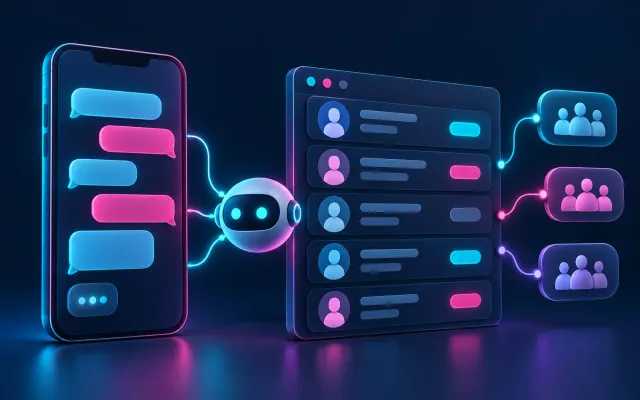
- An AI agent that answers replies in the hotel’s language and updates the CRM by itself
- In one day, what one person would take a month to do by hand: prospecting at a scale the client simply couldn’t afford before
The client
A company that offers a service for hotels, sold by subscription, with an interactive demo and a free trial on its website.
Its market is made up of tens of thousands of independent hotels in Europe, every one of them a potential customer, and it had no sales team to find and contact them.
The challenge
- No list. Booking.com shows you the hotels, but not who runs them or how to reach them.
- The person who decides isn’t at reception. The generic address reaches the front desk; the decision is made by the manager or the owner, and their email isn’t published anywhere obvious.
- One email is rarely enough. Every address needs its own sequence of follow-ups, and somebody has to keep track of who is due what and when, across thousands of hotels.
- Chains share managers. The same regional manager can appear as the contact of several hotels, and should not start receiving a new sequence for each one.
- The numbers lie. Corporate email security scanners open every link in every email, so “clicks” and “visits” go up without a single person having seen anything.
- Replies need fast, good answers, in the hotel’s language, with the right price and the right next step. A small team can’t do that for hundreds of conversations.
What we built
A system that runs the whole process, from finding the hotel to the paid subscription, inside the client’s own platform, with its own CRM and n8n workflows (self-hosted) for the steps that talk to the outside world.
1. Finding hotels on Booking.com
From the CRM, you choose a destination (a country, a region or a city) and the system goes through every page of Booking.com’s results for it. Ads are discarded, and each hotel is saved once with its Booking.com ID, city, stars, review score, number of reviews, accommodation type and price.
Searches are jobs you can follow, pause, resume and retry if Booking.com stops responding halfway. The accommodation type lets you leave out hostels or campsites and keep the hotels that fit the product.
2. Finding who to write to: general addresses and key staff
Every day, a process picks the hotels that still don’t have contact details and sends them to two n8n workflows:
- General contact: AI that searches the web (Gemini with Google Search) finds the hotel’s general addresses (reservations, info, reception) and phone numbers.
- Key staff: a second workflow looks for the people who run the hotel, such as the general manager, the owner or the management team, with their names, roles and emails.
So each hotel ends up with several addresses to work with, not just the generic inbox. The process handles up to 200 hotels a day, respects the limits of the services it uses, retries up to three times when a search fails, and shows how many contacts were found each day.
3. Email sequences, one address at a time
The system prioritises the addresses and works through them one by one. Each address receives a first email and several follow-ups, spaced out over days, from one of several sending accounts. The sending workflow (n8n) asks the CRM which hotels are due an email, starting with those that have gone longest without one, so every sequence moves forward on its own and none is forgotten.
A sequence stops as soon as the hotel replies, signs up or asks not to be contacted, and any hotel can be excluded permanently.
Before starting a sequence to an address, the system also checks whether that address has already been used for a different hotel. That’s typical of chains, where one regional manager covers several hotels. Instead of starting another sequence, it warns, so the same person doesn’t receive the same pitch once per hotel. Follow-ups to the same address for the same hotel continue as normal.
Each email carries a personal link to the website and the interactive demo, and every email sent is recorded in the hotel’s history.
4. Tracking that tells people from robots
The link carries a discreet parameter that identifies the hotel and stays with the visitor while they browse. From there, the system records how far each hotel gets, a step that only ever moves forward:
visited the website → tried the interactive demo → signed up → started the free trial → used it → subscribed
To keep scanners out of those numbers, a visit only counts when there’s real human behaviour: scrolling counts straight away (scanners don’t scroll); clicks and mouse movements only count after two seconds on the page. When a hotel signs up, its new account is linked to its CRM record automatically through its Booking.com ID, even if it signed up without the link.
5. An AI agent that answers replies
When a hotel replies, an AI agent reads the message alongside everything the CRM knows about that hotel and:
- classifies it: interested, has an objection, wants a meeting, not interested, out-of-office, bounce or already a customer;
- writes the reply in the hotel’s own language, with the right pricing for its number of hotels and one clear next step: the free trial, the demo, or a call for groups with ten hotels or more;
- handles the usual objections (“we don’t have time”, “it’s too expensive”, “we already use something else”) with arguments, not pressure, and respects a firm no;
- updates the CRM: the hotel’s stage and an English summary of what they said and what was answered, so anyone can pick up the conversation.
Out-of-office replies and bounces don’t get an answer; the agent just notes the return date or the alternative contact.
6. A CRM built for this funnel
- Every hotel with its status, stage and furthest step on the website, and a timeline of every email, reply, visit and change
- More than ten filters, combinable: stage, step reached, destination, sending account, last contact, date to wait until before the next one…
- Funnel statistics over time: emails sent, replies, visits, demos, sign-ups and subscriptions, counting unique hotels and not repeated events
- An API with its own key, so n8n and the AI agent read and update the CRM with the same rules as the team
How we worked
We built it in layers, in the order the bottleneck moved. First the hotel search, because without a list there was nothing else. Then the contacts, because Booking.com doesn’t give them. Then the sequences and the tracking, and that’s when we found that the first “visits” were mostly email scanners, which led to the rule of only counting real behaviour. The reply agent came last, when the volume of replies started to matter.
Each layer was tested on real hotels before moving on to the next, and each one can be adjusted without touching the others: changing the emails, the number of follow-ups, the sending rhythm or the agent’s instructions doesn’t require changes to the platform.
The results
- A pipeline that fills itself. Choosing a new destination is enough to have its hotels, their contacts and their sequences underway within days.
- Contact with the people who decide, not just the reception desk.
- Follow-ups that never get forgotten. Every address gets its full sequence, and it stops by itself when the hotel replies or signs up.
- Real numbers. The funnel counts people, not email scanners, so you know which emails and which destinations work.
- Every reply gets a proper answer, in the hotel’s language, with the CRM up to date without anyone typing.
Prospecting they couldn’t afford before
What the system does in a day, finding 200 hotels with their general addresses and key staff and starting their sequences, would take one person about a month by hand, well over 80 hours of work. And that’s before writing a single follow-up or answering a single reply.
So the real change isn’t the hours saved: with a small team, this level of prospecting simply wasn’t possible. Now it runs every day.
Key takeaways
- The free trial is the best hook. Letting the hotel try the service with no commitment says more than any sales email.
- Measure people, not clicks. Without filtering out scanners, any outreach looks like it’s working.
- Persistence has to be automatic. The follow-ups are where the replies come from, and they only happen reliably when the system keeps track of them.
Need a system like this for your business?
If you sell to companies and spend more time looking for who to write to than talking to customers, we can build the system that finds them, contacts them and follows up, connected to your CRM. See also our lead generation and data enrichment service. Book a free discovery call.